
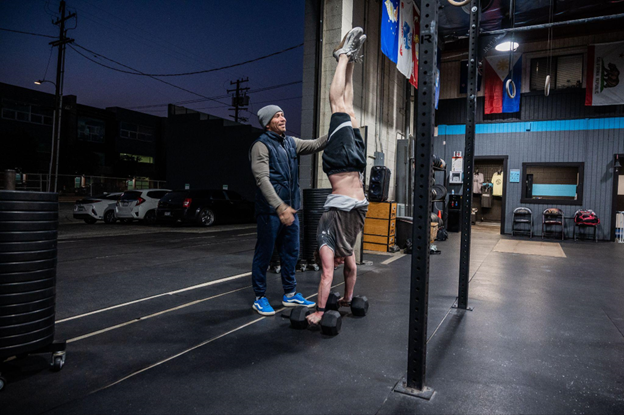
When Does Coaching Intensity Become a Liability Risk?
Coaching intensity becomes a liability when athletes start making decisions based on the energy in the room rather than their own limits. This typically occurs during high-intensity workouts, where competition, pacing, and coaching cues override a person’s sense of when to stop. The real liability risk is not that the workout is hard, but what fatigue does to behavior at high intensity.
An athlete’s form falls apart, but they keep going. Someone skips scaling because nobody else is doing it. Another person is clearly exhausted but keeps moving since the class hasn’t stopped. At this stage, intensity is no longer about individual ability but about keeping up with the group. This is where coaching liability can start.
Intensity is what keeps the affiliate gyms alive. It helps keep members, shapes the gym culture, and delivers the results people want. Members don’t want an easy workout; they want to push themselves with people who get it. Coaching intensity is what sets classes apart.
But working hard also changes the way people think during a workout. When everyone is out of breath and moving fast, athletes stop thinking about their decisions. They look around, they watch others, they wait for a signal that it is okay to stop. The danger rises at such times, but is difficult to see until it’s too late.
Where Intensity in Group Training Actually Comes From
Training intensity isn’t driven solely by the programming. It often starts with a few athletes setting the pace, and others follow without being told. As that builds, the room takes on its own momentum, and coaches may find themselves matching the group’s energy instead of controlling it.
People act differently in groups than when training alone. Someone who would normally rest keeps going because others haven’t stopped. Another avoids scaling to keep up. In a CrossFit class, intensity feeds on itself, making it harder to slow things down without changing the feel of the room.
The Shift From Coaching to Pressure (Where Risk Begins)
The transition from coaching to pressure is rarely clear. Encouragement may gradually become influence, especially in a high-energy class. Athletes respond to tone, pace, and the people around them, not just to direct instruction. Over time, that environment starts to influence how they make decisions during a workout.
Another layer is fatigue. Athletes tend to rely less on self-regulation and more on external cues when they get tired. They push because somebody else is pushing, not because they should. There’s no distinct moment when this shifts. It takes time to develop, and that is where the risk becomes apparent.
What It Looks Like During a Workout
Sometimes, athletes grind out reps their bodies can’t handle. The technique starts to break down, but they keep going to stay on track. Even when scaling is offered, it is often ignored because it disrupts the group’s rhythm. They are exhausted, yet their past experience gives them confidence that they can succeed again.
In a fast-paced class, a coach can only see so much in real-time. With several athletes working simultaneously, attention moves quickly. The problem is not that something was missed, but that the arrangement makes it more difficult to step in before someone crosses a line.
Why Experienced Athletes Still Create Risk
Liability risks may be higher with experienced athletes than with novices. They move faster, lift heavier, and use past successes to justify their decisions. They aim for personal bests, compare times, and attend every session as if it were a test. Confidence can be a problem if it masks fatigue or overrides good judgment.
More work equals more risk. An experienced athlete completes more reps in less time, leading to more fatigued movements and a higher risk of mistakes. They often can’t scale it because they’ve already done hard workouts. It works until it doesn’t. When it doesn’t work, the results are usually worse.
The Gray Area Between Athlete Choice and Coaching Responsibility
It is common after an injury to hear whether the athlete decided to continue or scale back. But those are often influenced by the environment, including coaching cues, class energy, and others’ actions. Responsibility doesn’t go away just because the athlete had the final say.
Coaches may not give direct commands, but their words still influence behavior. A little encouragement during a tough round or not offering a scale when a member is feeling fatigued can shape what happens next. The coach didn’t make the call, but they helped create the environment that made it seem necessary.
When It Doesn’t Follow the Usual Pattern
Some injuries happen with no apparent warning. The movement seems solid, the athlete is experienced, and the weight feels right. But fatigue can subtly affect balance, coordination, or timing. Even if nothing appears to be wrong, the body may not respond as it normally would at that moment.
Here, things become difficult to interpret. There is no obvious misplay or bad planning involved with the injury. It’s a result of hard work, timing, and how the athlete’s body is feeling that day. It all seems reasonable, but the result still raises questions about what really happened.
Also Read: Do Your CrossFit Coaches Know Emergency Protocols? Insurance Implications if They Don’t
What Affiliate Owners Start to Notice Over Time
Patterns emerge after running enough classes:
- The same athletes are hitting their limit during specific workout types
- Certain movements or time domains that consistently push people past safe thresholds
- Class sizes where coaching shifts from proactive to reactive
- Injuries clustering around benchmark days and partner WODs, not skill sessions
Experienced owners know some athletes will try too hard, and injuries are more likely to occur in crowded, high-energy classes than in controlled technique classes. But these patterns often remain unchanged because the very intensity that increases risk is what makes the gym experience engaging and effective.
How Class Size and Growth Increase Risk Exposure
With larger classes, it is more difficult to monitor each individual. A coach can’t take care of 15 athletes in the same way he can with six. There is more to manage, more questions, more things to watch, so the pace speeds up.
Larger classes also mean more competition and social pressure. When people are struggling, they just push on instead of asking for help or slowing down. Risk in large groups involves size and the athletes’ behavior. Growth is good for business, but it also changes the risks.
Where Liability Actually Shows Up After the Fact
Liability coaching is rarely an issue during the workout. It often arises later when an injury is being reviewed, and people look for reasons. The emphasis is not on what was done but what was coached, corrected, or allowed.
A class that seemed normal at the time can appear very different in retrospect. Encouragement can feel like overreaching, and fatigue that seemed trivial can be viewed as obvious. That change in mindset is where coaching liability gets complicated.
What Coaches and Owners Often Overlook
Coaching intensity is set by the room, the athletes, and the culture that has evolved over time. When everyone else is pressing on, and the exhaustion begins to creep in, it’s tougher to hold your pace. In that context, the effort intensifies, and small decisions begin to pile up without much awareness.
An extra round, a skip of a scale, pushing through fatigue, maybe it doesn’t seem like much. But together, they create conditions that increase the likelihood of injury. Even if an athlete makes those choices, there is still risk, and questions around trainer liability can arise depending on what was coached or what continued despite intervention.
What This Means for How You Run Classes
This doesn’t mean reducing intensity. It means understanding how intensity builds in a group setting and how it affects decision-making on the floor. Coaches are not just guiding individual athletes; they are managing the entire room. The pace, tone, and flow of the class all shape how athletes respond in real time.
Each athlete has a different threshold. Some need to be pushed, while others need to be held back. Recognizing those differences is key to keeping training productive without letting intensity carry athletes past what they can safely handle.
Also Read: Mitigating Risks: Lowering Liability for CrossFit Affiliates with Safety Measures
Conclusion
Intensity itself isn’t the problem. The issue is not noticing how it builds up. They develop slowly, in patterns you can see before anything goes wrong. Owners who understand the link between coaching intensity, athlete behavior, class size, and programming can manage risk without sacrificing what makes their gym unique.
Those patterns are already there. You see it in who gets injured, which workouts cause the most issues, and which classes are more difficult to manage. Identifying these patterns early on can help to avoid injuries becoming liability claims down the road.
If your gym has evolved to larger classes or more competitive programming, it’s worth checking whether your coverage still aligns with how you operate today. CrossFit RRG can walk through your setup and highlight potential gaps, helping you align your policy with real class conditions. Schedule a coverage review today.